
Speaker Series
During the semester, we host leading experts in AI every two weeks. These events take place in-person in Berlin (no hybrid option). Talks are recorded and published afterwards on our YouTube channel. Join us to learn from the best in the field and connect with the community!
- Summer Semester 2024

Thomas Unterthiner - Google DeepMind
Abstract
This presentation focuses on a novel approach called OKO (odd-k-out learning), which aims to enhance the accuracy and calibration of machine learning models. OKO is a user-friendly method that improves model performance by modifying how data points are sampled during training and adjusting the computation of cross-entropy. This principled set learning approach is designed to help machine learning models provide predictions that are not only accurate but also well-balanced and reliable. The talk delves into the technical aspects of OKO and demonstrate its practical applications in improving model calibration and accuracy.
About
Thomas Unterthiner is a senior research engineer at Google DeepMind. He obtained his PhD in computer science at the Johannes Kepler University Linz, where he worked on several topics in computer vision and bioinformatics.
1 / 4 · Recording
Daniel Zügner - Microsoft AI4Science
Abstract
The proposed diffusion graph neural network leverages typical properties of materials to efficiently and reliably suggest new stable compounds. Additionally, the model uses masked diffusion to generate atom types, further enhancing its predictive capabilities. The approach also supports conditional generation, allowing for the creation of materials with specific properties, such as band gap or bulk modulus. The results are compared against those obtained from density functional theory (DFT)-based workflows, demonstrating the model's effectiveness.
About
Daniel Zügner is a senior research scientist at Microsoft AI4Science. Previously, he obtained his PhD in computer science at the Technical University of Munich, where he focused on deep learning for graphs and robustness of deep learning.
Abstract
“Towards Open Language Models for Europe,” outlines the technical, legal, and organizational challenges of building open, multilingual large language models in academia, emphasizing the need for European data sovereignty and community-driven efforts like the Occiglot project. He advocates for open-source development, efficient training methods, and collaborative contributions to advance LLMs tailored to European languages.
About
Malte Ostendorff is researcher at the German Research Center for Artificial Intelligence (DFKI) and did his PhD in the Scientific Information Analytics group at the University of Göttingen, supervised by Prof. Bela Gipp.
1 / 7 · Recording
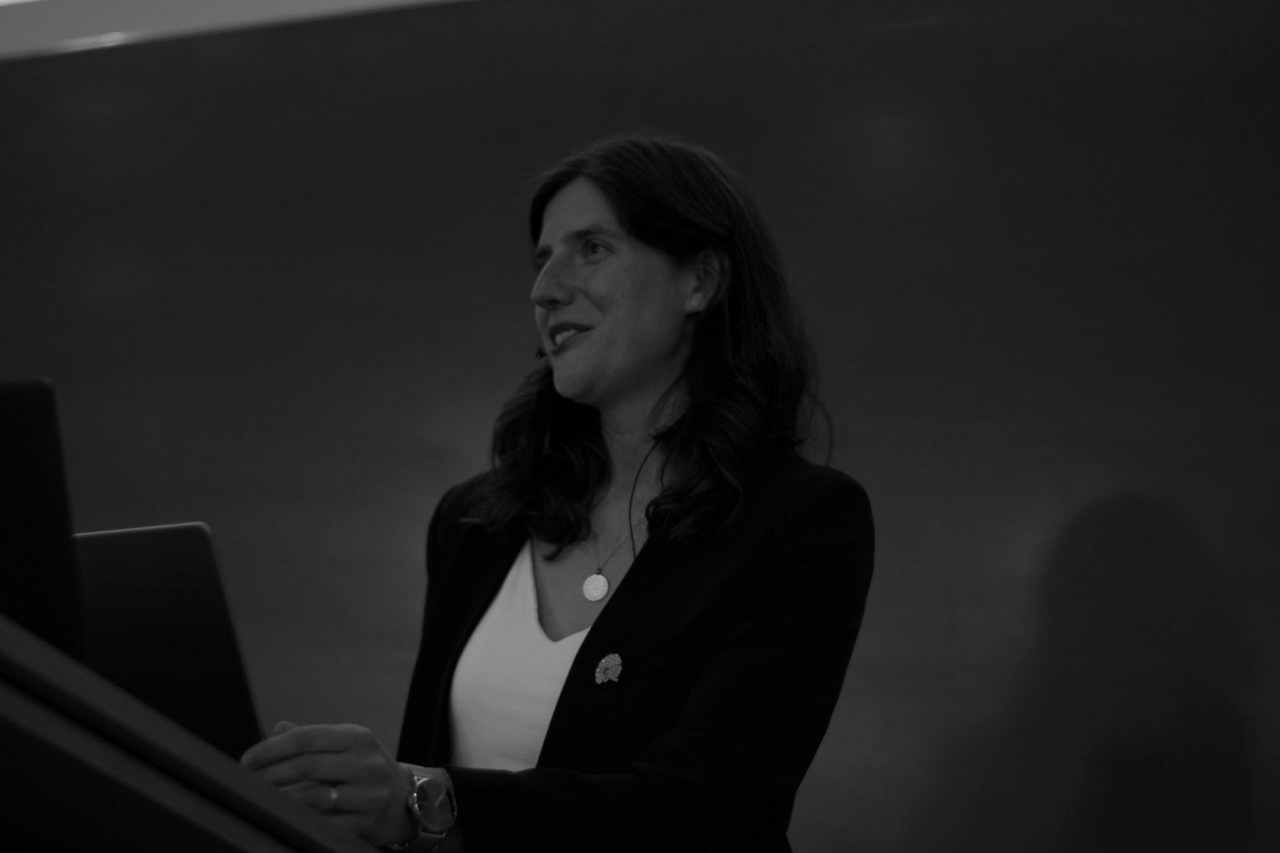
Prof. Fatma Deniz - TU Berlin
Abstract
Fatma's talk deals with Natural language representations in brains and machines.
About
Fatma Deniz, Vice President of the TU Berlin as well as Chair of the Language and Communication in Biological and Artificial Systems Lab.
 1 / 4 · Photo
Abstract
Prof. Hönig's presentation explores cutting‐edge techniques for enabling intelligent flying multi-robot systems, where advanced machine learning models integrate seamlessly with motion planning and control to enhance safety and coordination. By leveraging neural interaction models and conflict-based search algorithms, the talk demonstrates how AI can effectively address the complex challenges of autonomous aerial teamwork.
About
Prof. Wolfgang Hönig is an assistant professor at TU Berlin, leading the Intelligent Multi-Robot Coordination Lab. The focus is on developing methods for large teams of robots to collaborate on real-world tasks, utilizing informed search, optimization, and machine learning techniques.
1 / 5 · Recording- CancelledSpeaker Series #6Human alignment of neural network representations
Lukas Muttenthaler - Google DeepMind, TU Berlin

Prof. Cecilia Clementi - FU Berlin
Abstract
Prof. Clementi delves into the exciting intersection of machine learning, experimental science, and molecular modeling. This session offers a comprehensive look at how cutting-edge machine learning techniques can be combined with experimental data to enhance our understanding of molecular dynamics.
About
Prof. Cecilia Clementi is an Einstein professor at the FU Berlin Theoretical and Computational Biophysics Lab
1 / 4 · Recording- Winter Semester 2024/25
Abstract
Veronika's talk examines how AI can fortify disinformation resilience by creating transparent, accurate, and adaptable systems for detecting propaganda across diverse languages and media formats. By leveraging sophisticated linguistic features, statistical models, and real-world user feedback, she illustrates a comprehensive approach that empowers journalists, fact-checkers, and policymakers to effectively counter misinformation.
About
Veronika Solopova is a PostDoc at TU Berlin and NLP Engineer at Mantis Analytics. Her work is centered around analyses regarding social media and detecting hate speech, propaganda and detecting shitstorms.
1 / 4 · Recording
Abstract
Robert's talk, “The AI Scientist,” outlines an innovative pipeline where generative AI automates the research process—from formulating ideas and designing experiments to drafting manuscripts. By integrating iterative code implementation, automated reviewing, and ethical safeguards, the presentation demonstrates how AI can accelerate scientific discovery while keeping human insight in the loop.
About
Robert Lange is a Research Scientist at Sakana.AI and a PhD student at TU Berlin, working on Evolutionary Meta-Learning. He gained Professional Experiences at Google DeepMind, Science of Intelligence and other research institutions before joining Sakana.AI
1 / 5 · RecordingAbstract
Marc's talk explores how combining traditional model-based planning with modern neural network approaches enables robots to navigate and manipulate complex, unstructured environments. He demonstrates that integrating deep visual constraints and generative models with classical planning techniques can create more adaptable and robust decision-making strategies in robotics.
About
Prof. Marc Toussaint is a full professor at the Technical University of Berlin, where he leads the Learning and Intelligent Systems Lab. His research focuses on machine learning, robotics, and intelligent decision-making. Previously, he was a full professor at the University of Stuttgart, a Max Planck Fellow at the MPI for Intelligent Systems, and led the ML-Robotics lab at Amazon Berlin. Before that, he has held research positions at MIT, Free University of Berlin and the University of Edinburgh. After studies in theoretical physics and neuroinformatics, he obtained his PhD in Adaptive Systems from Ruhr University Bochum.
1 / 4 · Recording
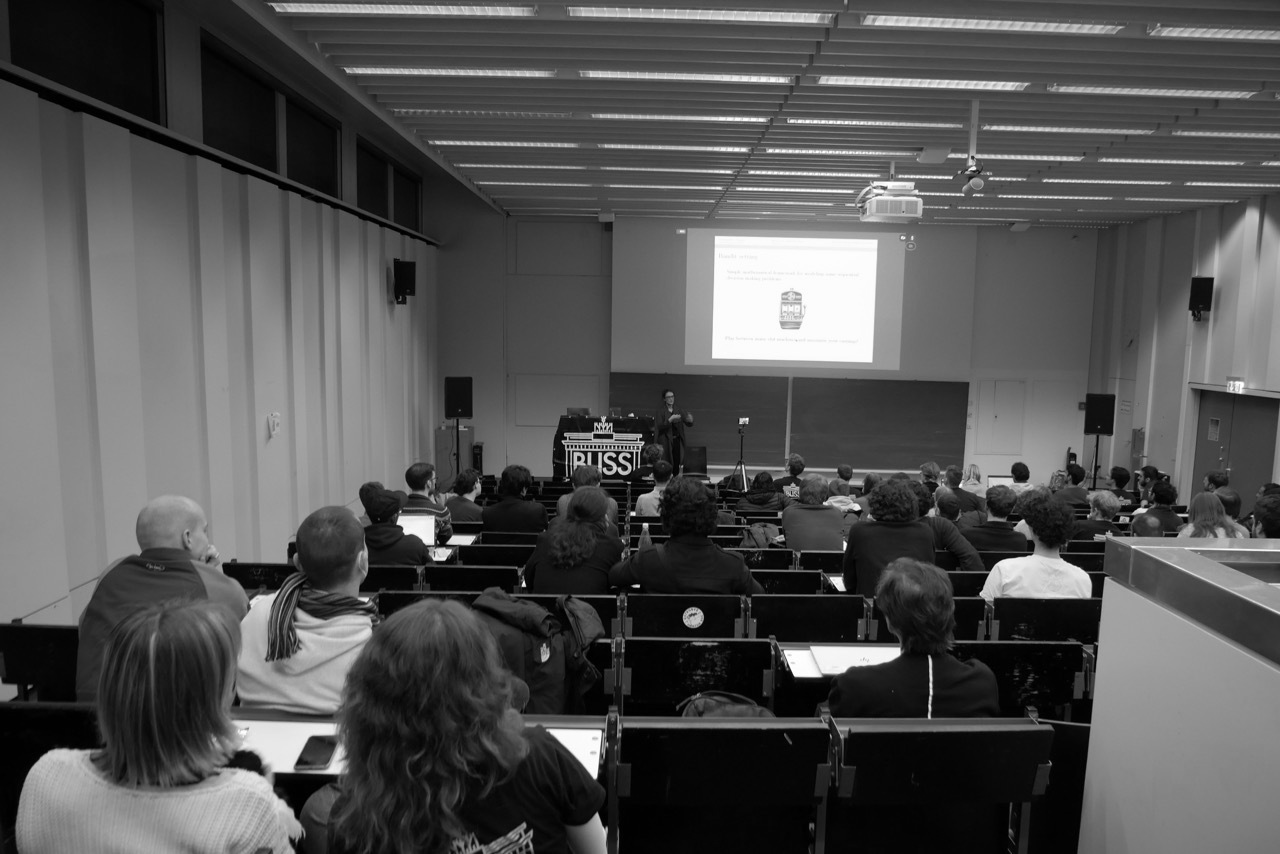
Prof. Alexandra Carpentier - University of Potsdam
Abstract
This talk introduces Bandit Theory, a framework for sequential, adaptive learning in uncertain environments with partial information. Inspired by the classic multi-armed bandit problem, where a decision-maker balances exploration and exploitation, this approach extends to settings where actions actively influence the data received. Unlike traditional batch learning, the learner gathers data incrementally, adapting strategies based on observations.
About
Prof. Alexandra Carpentier is a professor of Mathematical Statistics and Machine Learning at the University of Potsdam. She holds a PhD in Mathematical Statistics from INRIA, was a Postdoctoral Researcher at the University of Cambridge and has previously been on faculty at the University of Magdeburg and Université Paris-Nanterre. Her research focuses on sequential decision-making, bandit algorithms, and high-dimensional statistical inference, with applications in machine learning, anomaly detection, and neuroscience. She is the recipient of the prestigious Von Kaven Prize (2020) and serves as an associate editor for several top journals, including the Annals of Statistics and SIAM UQ.
 1 / 3 · Photo
Nima Siboni and Miguel Andres - InstaDeep
Abstract
This talk explores how generative models can create novel molecular structures while RL fine-tunes these candidates toward desired biological and chemical properties. By incorporating domain-specific constraints and feedback mechanisms, this approach has the potential to accelerate drug discovery, optimizing for both efficacy and synthesizability.
About
Nima Siboni and Miguel Arbesú Andrés are Senior (Applied) Research Engineers at InstaDeep. They did their PhDs at RWTH Aachen University resp. University of Barcelona.
 1 / 4 · Photo
Abstract
The integration of artificial intelligence and machine learning methods in the life sciences has enabled new insights into complex biological systems. However, the reliability and interpretability of machine learning (ML) models remain critical challenges. This talk explores strategies for informing ML models with domain-specific knowledge to enhance their accuracy and robustness. Additionally, it addresses the importance of quantifying and explaining uncertainty in data-driven analyses to ensure transparency and trust in biomedical applications.
About
Prof. Katharina Baum is an Assistant professor for Data Integration in the Life Sciences at the Free University Berlin’s Institute of Computer Sciences. With a strong background in theoretical biophysics and data science, she has held research positions at renowned institutions, including the Hasso Plattner Institute, Mount Sinai’s Icahn School of Medicine, and the Max Delbrück Center for Molecular Medicine. Her expertise lies at the intersection of mathematics, computer science, and biomedical research, focusing on integrating and analyzing complex biological data. Prof. Baum holds a PhD in Theoretical Biophysics from Humboldt University Berlin and has studied Mathematics at Humboldt University and École Polytechnique in France.
1 / 4 · Recording
Abstract
Many data collection processes in natural scientific settings are described by partial differential equations (PDEs) and stochastic differential equations (SDEs). In these settings, key statistical tasks such as the estimation of unknown high-dimensional parameters, prediction and uncertainty quantification have given rise to sophisticated frequentist and Bayesian statistical methodology. Recently, 'Scientific Machine Learning' has also played a big role in inferring complex relationships from data. In this talk, we discuss recent mathematical results in this broad context. In particular, we discuss dimension-free statistical convergence results for regression of 'operators' with neural networks, and we discuss the computational complexity of sampling from high-dimensional posterior distributions. If time permits, we will also discuss some mathematical foundations for PDE and SDE-based generative AI models.
About
Prof. Sven Wang is an assistant professor for Mathematical Statistics and Stochastics at the Humboldt University of Berlin. He previously studied mathematics at LMU Munich and Cambridge University and holds a PhD in Mathematical Statistics from Cambridge University. Before he started his position as an assistant professor here in Berlin, he spent two years as a Postdoc at the Massachusetts Institute of Technology (MIT).
1 / 4 · Recording
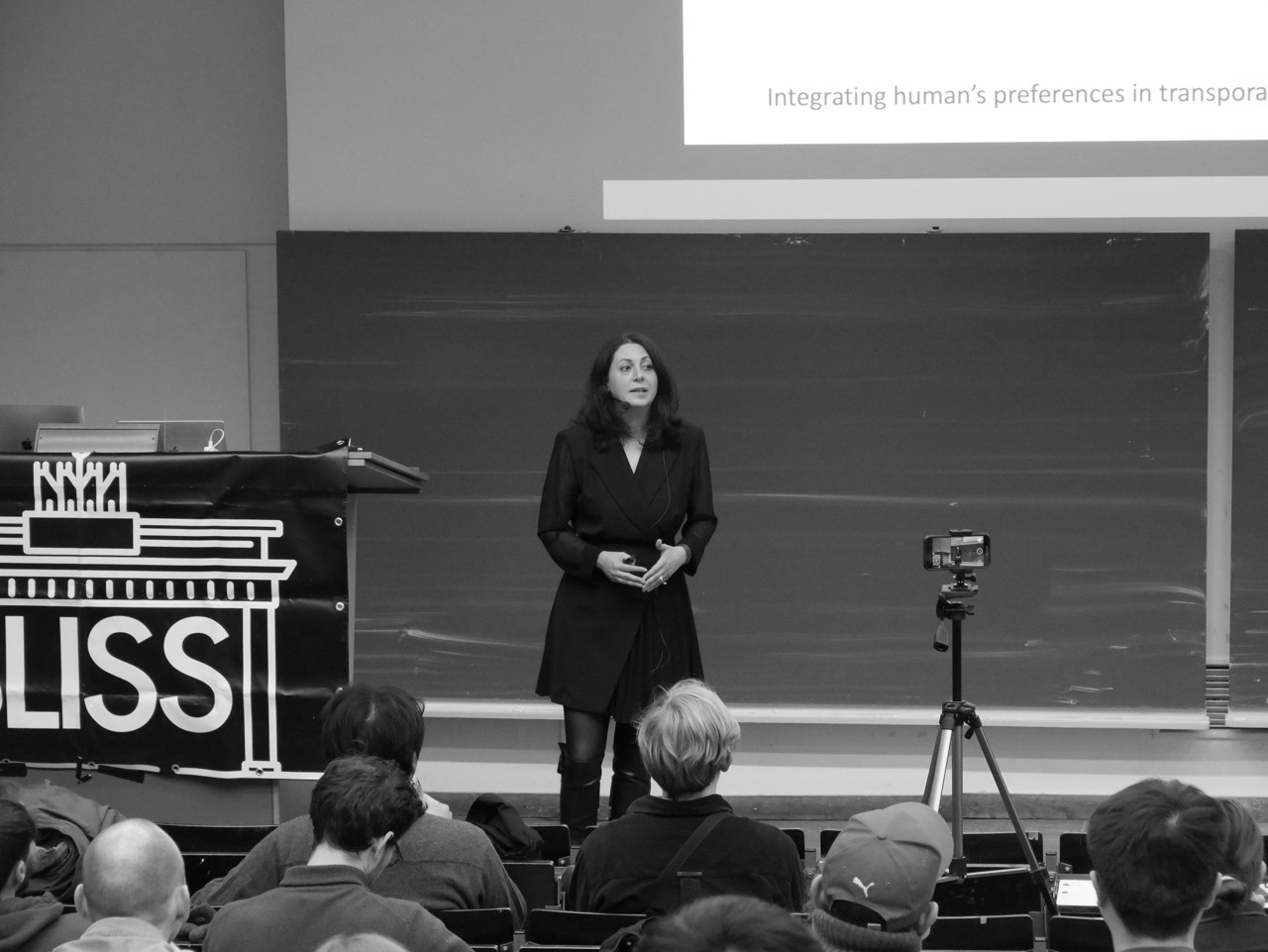
Prof. Sanaz Mostaghim - Otto von Guericke University of Magdeburg
Abstract
Decision-making is a fundamental aspect of intelligent systems, from autonomous robots to complex optimization problems in science and engineering. This talk provides an overview of research on computational decision-making, focusing on bio-inspired optimization, multi-objective evolutionary algorithms, and AI-driven strategies. It explores how these methods enhance decision processes in dynamic and uncertain environments, with applications ranging from robotics to transportation and infrastructure. The talk highlights the role of AI in developing efficient, adaptive, and explainable decision-making systems.
About
Prof. Sanaz Mostaghim is a full professor of Computer Science at the Otto von Guericke University of Magdeburg and Institute Director at Fraunhofer IVI. She is also a member of the Saxon Academy of Sciences. She holds a PhD in Electrical Engineering and Computer Science from the University of Paderborn (2004), where she focused on bio-inspired optimization methods. She held a postdoctoral position at ETH Zurich and completed her habilitation at Karlsruhe Institute of Technology (KIT) in 2012. In 2014, she was awarded the prestigious DFG Heisenberg professorship at KIT. Prof. Mostaghim has held visiting positions at Swinburne University (2010) and Yale University (2013). She is an active member of IEEE Computational Intelligence Society, having served as vice president (2021–2024) and in editorial roles for IEEE journals. Her research spans evolutionary optimization, AI, and self-organized systems.
 1 / 3 · Photo
- Summer Semester 2025

Martin Genzel - Merantix Momentum
Abstract
The widespread adoption of Foundation Models, especially LLMs, is often hindered by their substantial size and computational demands, especially in resource-limited settings. While post-training compression offers a promising avenue to mitigate these challenges, the process can feel like a "black box" for the user, requiring significant expertise and trial-and-error to find the right balance between model size and performance. This talk introduces Any Compression via Iterative Pruning (ACIP), a novel algorithmic approach designed with the user in mind. ACIP allows for intuitive and direct control over the compression-performance trade-off, akin to compressing an image. It leverages a single gradient descent run of iterative pruning to establish a global parameter ranking, from which models of any target size can be immediately materialized. ACIP demonstrates strong predictive performance on downstream tasks without costly fine-tuning. Across various open-weight LLMs, it achieves state-of-the-art compression results compared to existing factorization-based methods. Moreover, it seamlessly complements common quantization techniques for even greater compression.
About
Martin Genzel is a Senior Research Engineer at Merantix Momentum.
1 / 4 · Recording
Timothée Darcet - Meta AI, Inria
Abstract
Masked Image Modeling (MIM) offers a promising approach to self-supervised representation learning, however existing MIM models still lag behind the state-of-the-art. In this talk, we systematically analyze target representations, loss functions, and architectures, to present CAPI - a novel pure-MIM framework that relies on the prediction of latent clusterings. Our approach leverages a clustering-based loss, which is stable to train, and exhibits promising scaling properties. Our ViT-L backbone, CAPI, achieves 83.8% accuracy on ImageNet and 32.1% mIoU on ADE20K with simple linear probes, substantially outperforming previous MIM methods and approaching the performance of the current state-of-the-art, DINOv2.
About
Timothée Darcet is a PhD student at Meta AI and Inria.
1 / 5 · RecordingYu Xie and Michael Gastegger - Microsoft AI4Science
Abstract
Following the sequence and structure revolutions, predicting the dynamical mechanisms of proteins that implement biological function remains an outstanding scientific challenge. Several experimental techniques and molecular dynamics (MD) simulations can, in principle, determine conformational states, binding configurations and their probabilities, but suffer from low throughput. Here we develop a Biomolecular Emulator (BioEmu), a generative deep learning system that can generate thousands of statistically independent samples from the protein structure ensemble per hour on a single graphical processing unit. By leveraging novel training methods and vast data of protein structures, over 200 milliseconds of MD simulation, and experimental protein stabilities, BioEmu’s protein ensembles represent equilibrium in a range of challenging and practically relevant metrics. Qualitatively, BioEmu samples many functionally relevant conformational changes, ranging from formation of cryptic pockets, over unfolding of specific protein regions, to large-scale domain rearrangements. Quantitatively, BioEmu samples protein conformations with relative free energy errors around 1 kcal/mol, as validated against millisecond-timescale MD simulation and experimentally-measured protein stabilities. By simultaneously emulating structural ensembles and thermodynamic properties, BioEmu reveals mechanistic insights, such as the causes for fold destabilization of mutants, and can efficiently provide experimentally-testable hypotheses.
About
Yu Xie and Michael Gastegger are both Senior Researchers at Microsoft AI4Science.
1 / 7 · RecordingAbstract
Invisible image watermarking embeds information into image pixels in a way that remains imperceptible to the human eye but can still be retrieved even after significant image editing. However, traditional methods struggle when dealing with small, localized watermarked areas—something that often happens in real-world scenarios where images come from different sources or undergo modifications. In this talk, after a brief introduction to image watermarking, we’ll explore an approach designed to tackle this issue. Watermark Anything (ICLR 2025) reframes image watermarking as a segmentation problem. We’ll walk through the motivation behind this idea, how we developed and trained the model, the challenges we faced, and the final results.
About
Pierre Fernandez is a Research Scientist at Meta AI
1 / 4 · RecordingDaniel Duckworth - Google DeepMind
Abstract
Our innate ability to reconstruct the 3D world around us from our eyes alone is a fundamental part of human perception. For computers, however, this task remained a significant challenge — until the advent of Neural Radiance Fields (NeRFs). Upon their introduction, NeRFs marked a paradigm shift in the field of novel view synthesis, demonstrating huge improvements in visual realism and geometric accuracy over prior works. The subsequent proliferation of NeRF variants has only expanded their capabilities, unlocking larger scenes, achieving even higher visual fidelity, and accelerating both training and inference. Nevertheless, NeRF is no longer the tool of choice for 3D reconstruction. Why? Join a researcher from the front lines as we explore NeRF’s foundations, dissect its strengths and weaknesses, see how the field has evolved, and explore the future of novel view synthesis.
About
Daniel Duckworth is a Senior Research Software Engineer at Google DeepMind
1 / 4 · Recording
Abstract
We will navigate through the alignment challenges and safety considerations of LLMs, addressing both their limitations and capabilities, particularly focusing on techniques related to instruction prefix tuning and their theoretical limitations toward alignment. Additionally, I will discuss fairness across languages in common tokenizers used in LLMs. Finally, I will address safety considerations for agentic systems, illustrating methods to compromise their safety by exploiting seemingly minor changes, such as altering the desktop background to generate a chain of sequenced harmful actions. I will also explore the transferability of these vulnerabilities across different agents.
About
Adel Bibi is a senior researcher in machine learning and computer vision at the Department of Engineering Science since 2023, University of Oxford, a Research Member of the Common Room at Kellogg College, and a member of the ELLIS Society. Bibi is an R&D Distinguished Advisor with Softserve.
1 / 4 · RecordingJannik Kossen - Meta FAIR
Abstract
Large language models can 'hallucinate' factually incorrect outputs, presenting significant risks for their adoption to high-stakes applications. Jannik will present joint work recently published in Nature (https://www.nature.com/articles/s41586-024-07421-0) on detecting hallucinations in large language models using semantic entropy, which mitigates hallucinations by quantifying the model's own uncertainty over the meaning of generations. He will also discuss a recent pre-print (https://arxiv.org/abs/2406.15927) that proposes a method to drastically reduce the cost of uncertainty quantification in LLMs by predicting semantic entropy from latent space, and he may ramble about uncertainties in LLMs more generally.
About
Jannik is an AI research scientist at Meta FAIR, building LLMs for code generation. He worked at the University of Oxford on uncertainty and data-efficiency in vision and language models, which will culminate in the awarding of his PhD. He previously studied Physics in Bremen and Heidelberg, has interned at Google and DeepMind, and now lives in Berlin.
1 / 5 · Recording- Winter Semester 2025/26
Federico Barbero - Google DeepMind, University of Oxford
Abstract
This talk explores the fundamental challenges that large language models face when processing long contexts. Federico will discuss the technical limitations, architectural constraints, and potential solutions for improving LLMs' ability to effectively handle extended input sequences.
About
Federico Barbero is a researcher at Google DeepMind and the University of Oxford, focusing on the challenges and limitations of large language models, particularly in handling long-context scenarios.
1 / 5 · Recording
Abstract
Modern AI systems are deployed globally, across cultures and in hundreds of languages, yet most safety research and evaluation remains English-centric. In this talk, we will outline a pragmatic roadmap for scaling safety beyond a single linguistic or cultural frame. We will first outline AI safety as a full-stack technical discipline spanning robustness, alignment, privacy, misuse resistance, and critically, evaluation. We will then argue that harm is not universal: what counts as harmful varies with local norms and histories. Drawing on evidence from multilingual red-teaming and jailbreak studies, we will show higher failure rates in low-resource languages and the limits of translate-and-test approaches. We will introduce a global-vs-local harm lens, address data scarcity and long-tail challenges, and present actionable mitigations. Finally, we will examine fairness in model evaluation and close with concrete recommendations for building culturally aware benchmarks and auditing multilingual safety so models are not only capable, but reliably aligned with the communities they serve.
About
Beyza is a Senior Research Scientist at Cohere in Berlin, working on large-scale machine learning with a focus on language models. Prior to this, she was a Research Scientist at Amazon Web Services (2017-2022) and held research assistant and intern positions at Boğaziçi University and Amazon, where she worked on applied machine learning problems. She completed her PhD and MSc in Computer Science at Boğaziçi University, following a BSc in Computer Engineering at Bilkent University.
1 / 4 · RecordingAbstract
Training models on large-scale data has given us powerful generative capabilities for text, images, and video. However, this success has not yet extended to training generalist embodied agents. This talk tackles this gap by focusing on a potential solution to this problem: scalable world models. We'll trace the idea of planning in predictive models, from its origins to modern efforts on building world models directly from pixels. I'll discuss the primary challenge of scaling these models and present our work, Genie, which enables us to learn world models without explicit action labels at scale, demonstrating a new path forward for training the generalist agents of the future.
About
Ashley is a Senior Research Scientist at Google DeepMind, where she works on reinforcement learning and foundational world models. She received her PhD in Computer Science from Georgia Tech in 2019, where she developed models for inferring latent actions, rewards, and policies from videos. Previously, she was a Research Scientist at Uber AI Labs and an intern at Google Brain. She holds a BSc in Computer Science from the University of Georgia.
1 / 5 · Recording
Ameya Prabhu - Tübingen AI Center
Abstract
This talk discusses the latest advancements in continual learning for foundation models.
About
Ameya is a Postdoctoral Researcher at the Bethge Lab, Tübingen AI Center, where he works on developing frontier benchmarks for foundation models with a broader focus on automated scientific discovery. He received his PhD in Artificial Intelligence from the University of Oxford in 2024, working on continual learning and robustness, including contributions such as GDumb and RanDumb. He previously held research roles at Intel Labs, Verisk, IBM, and WizCal, spanning topics from large-scale continual learning to neural architecture search and uncertainty estimation. Before Oxford, he completed a dual Bachelor’s and Master’s by Research in Computer Science at IIIT Hyderabad. His work has been published at NeurIPS, ICML, ICCV, EMNLP, and TMLR.
1 / 2 · RecordingAbstract
Real-world understanding necessitates modeling complex temporal and motion cues, yet current image-first approaches often fall short in capturing "what is happening" in favor of "what" is merely present. Furthermore, convincingly demonstrating scaling for pure self-supervised learning from video has remained a challenge, largely because prior evaluation has focused on semantic tasks like action classification. This talk addresses these limitations by introducing a scalable, video-native approach built on masked auto-encoding. We demonstrate that by focusing evaluation on challenging non-semantic 4D vision tasks—such as point and object tracking, camera pose, and depth estimation—MAE with transformer video models actually scales. Specifically, we show consistent performance improvements as the model size is increased from 20 million up to a new industry record of 22 billion parameters, rigorously confirming the benefits of scaling 4D representations.
About
Dilara is a Research Engineer at Google DeepMind in London, working on video understanding. She received her MSc in Computer Science from the Technical University of Munich in 2022, specializing in computer vision and graphics as a TEV/DAAD scholar, and her BSc in Computer Engineering from Boğaziçi University, where she graduated with high honors. Previously, she held engineering roles at Facebook Reality Labs, Microsoft, and X (The Everyday Robot Project), as well as a site reliability internship at Google.
1 / 4 · Recording
Abstract
The standard paradigm of machine learning separates training and testing. Training aims to learn a model by extracting general rules from data, and testing applies this model to new, unseen data. We study an alternative paradigm where the model is trained at test-time specifically for the given task. We investigate why such test-time training can effectively specialize a model to individual tasks. Further, we demonstrate that such test-time training enables models to continually improve and eventually solve challenging tasks, which are out of reach for the initial model.
About
Jonas is a PhD student in the Learning and Adaptive Systems Group at ETH Zurich, advised by Andreas Krause. His research focuses on test-time training and reinforcement learning, with broader interests in probabilistic inference, optimization, and online learning. He received an MSc in Theoretical Computer Science and Machine Learning from ETH Zurich, where he was awarded the ETH Medal, and a BSc in Computer Science and Mathematics from the Technical University of Munich. His work has been published at NeurIPS, ICLR, ICML, and COLM.
1 / 3 · Recording
Abstract
The "alignment problem" in AI ethics refers to the challenge of instilling human values into automated systems. This is difficult for many reasons, not least because humans themselves are poorly aligned—our behavior as individuals and societies routinely deviates from our stated values. I propose a different challenge, which I argue is simpler to solve and more immediately beneficial. "Inverse alignment" is the task of using AI to help us live up to our own values. I examine two questions: Could AI help us become better individuals? Could AI help us build more just societies? Focusing on weakness of will and coordination failures, I explore whether and how AI might address these pervasive moral dilemmas. I argue that the primary obstacles are not technological but rather individual and structural vices that drive poor decision-making. While AI-enabled interventions could potentially help under the right conditions, there are real risks associated with overreliance on inverse alignment strategies. Any serious AI ethics discourse must nevertheless grapple with this possibility, given its profound implications for human flourishing.
About
David is a Lecturer in Artificial Intelligence at King’s College London, where his research spans machine learning, philosophy of science, and computational biology. He received his DPhil from the University of Oxford, focusing on algorithmic fairness and explainability, and was previously a Postdoctoral Research Fellow in the Department of Statistical Science at University College London, working on causal discovery and inference. He also serves as an Associate Editor at Minds & Machines and contributes as a Data Scientist at Queen Mary University’s Centre for Translational Bioinformatics.
1 / 3 · RecordingAhmed Salem - Microsoft Security Response Center (MSRC)
Abstract
As LLMs move from passive assistants to action taking agents, the price of intelligence is increasingly paid in control failures: what the model treats as instruction, how behavior shifts across time and context, and how fragile safety properties can become under downstream adaptation. In this talk, we begin with indirect prompt injection as an end‑to‑end problem, where untrusted content can steer downstream actions in realistic pipelines. We then discuss a defense direction that secures agent planning through deterministic policy enforcement and principled control over what information is exposed during planning. Finally, we turn to a practical question that underlies all of these results: how do we know when an agent/LLM is actually safe, rather than merely scoring well on an evaluation? We highlight two factors that can systematically distort safety measurement in agent settings. First, reasoning models can change compliance when they infer they are being evaluated (“test awareness”), which can bias apparent robustness and complicate safety audits. Second, we discuss implicit memory as a hidden channel that challenges the “stateless” assumption and enables temporal behaviors that standard evaluation setups may fail to surface.
About
Ahmed is a Researcher at the Microsoft Security Response Center (MSRC), focusing on machine learning privacy, biomedical data privacy, and applied cryptography. He was previously a Postdoctoral Researcher at Microsoft Research Cambridge (2022–2024). He received his PhD in Computer Science from CISPA Helmholtz Center for Information Security, Saarland University, under the supervision of Michael Backes and Yang Zhang, graduating summa cum laude. Before that, he earned his MSc in Computer Science from Saarland University with high honors and his BSc in Digital Media Engineering from the German University in Cairo. His work has appeared at ICML, USENIX Security, CCS, NDSS, and Oakland.
- Summer Semester 2026

Abstract
Training large language models at scale introduces a cascade of systems bottlenecks absent at smaller scales: from communication overhead and memory fragmentation to subtle numerical instabilities that surface only across thousands of devices. This talk covers the practical design choices behind scaling LLM training to thousands of GPUs: what parallelism strategies work (and when they break), how to keep training runs efficient and stable, and the engineering trade-offs that shape modern pretraining infrastructure. The presentation aims to be accessible to a broad ML audience, drawing on real-world experience from large-scale open-source training runs at Hugging Face.
About
Nouamane Tazi is a Machine Learning Research Engineer at Hugging Face, specializing in training and scaling large language models. He is a co-author of SmolLM3 and The Ultra Scale Playbook, and his research spans NLP, deep learning, and scalable AI infrastructure.
Abstract
Scaling has driven progress in language models, but improvements in peak performance often fail to translate across languages. In this talk, I show how multilingual models expose the limits of scale and highlight the importance of balanced performance. I argue for a shift from optimizing peaks to lifting the floor, through better data, design, and evaluation illustrated through Tiny Aya.
About
Marzieh Fadaee is the Head of Cohere Labs, where she leads research on fundamental problems in artificial intelligence. Her work spans multilingual language models, data-efficient learning, model evaluation, and trustworthy AI, with a focus on building systems that are robust, inclusive, and globally impactful. She co-leads the Aya initiative that brought together over 3,000 collaborators worldwide to create the world's largest multilingual instruction dataset and the development of a series of state-of-the-art multilingual language and vision models. Before joining Cohere Labs, Marzieh was the Research Lead at Zeta Alpha Vector, where she pioneered innovative approaches to knowledge discovery and organization. She holds a PhD from the University of Amsterdam where she conducted foundational research on neural machine translation. Her research has been published in top venues such as NeurIPS, ACL, EMNLP, and ICLR, and she frequently serves as a mentor and advisor in the global AI research community.
Abstract
As AI systems become integrated into every aspect of our lives, a key challenge is to ensure that they are built to empower, rather than to disempower humans. I discuss the nature of human agency, and the ways that it is enhanced or degraded by technology. I summarise recent evidence which has explored how humans are empowered or disempowered when they interact with conversational AI systems. I conclude by talking about potential technical solutions for enhancing human agency using AI.
About
Christopher Summerfield is Professor of Cognitive Neuroscience at the University of Oxford, and a Research Director at the UK AI Security Institute. His work focuses on understanding the cognitive and neural mechanisms that underlie human learning and decision-making, and on studying the impacts of AI on society. His research bridges the fields of cognitive science, neuroscience, and artificial intelligence. He is particularly interested in how insights from human cognition can inform the development of more advanced and safer AI systems.
Georgia Channing - Hugging Face
Abstract
Foundation models have transformed how we read and design biological systems, from protein structure prediction to the generation of novel sequences. But building these models is as much an engineering problem as a scientific one. This talk looks at what it takes to bring AI for biology from research into practice, and at the challenges that make science a uniquely demanding domain for machine learning. We will cover how foundation models for biology are trained and deployed at scale, why scientific data is so different from the text and images that drive mainstream AI, and where the gap between a benchmark result and a real biological discovery still lies. The aim is to show how modern AI connects to living systems, and what we need to get right for synthetic biology to fully benefit from it.
About
Georgia Channing is the AI for Science Lead at Hugging Face, working at the intersection of machine learning and the natural sciences. She read for her Master's and PhD in computer science at the University of Oxford, with a focus on applying AI to scientific discovery. Her work has spanned a wide range of AI-for-science areas, including remote sensing, biophysics, and materials design. She now focuses on building open tools, models, and communities that make scientific research more accessible, collaborative, and reproducible.
Abstract
Modern vision foundation models are highly capable and used as feature extractors in virtually any modern computer vision project. However, their patchified outputs inherently limit performance on dense, pixel-wise tasks. This talk presents strategies to learn and optimize dense visual features beyond these standard patches. We first introduce DIY-SC, a framework that leverages pseudo-labels to significantly improve pretrained models for correspondence tasks, while maintaining the original backbone's generalizability. We then focus on AnyUp, a universal feature upsampler that achieves state-of-the-art upsampling performance across diverse resolutions, domains, and downstream tasks. AnyUp is the first upsampler that is agnostic to the source features at inference time, significantly increasing its utility in practical settings. Finally, the talk briefly discusses recent applications of AnyUp.
About
Thomas Wimmer is a doctoral researcher and PhD fellow of the Max Planck ETH Center for Learning Systems, advised by Jan Eric Lenssen, Bernt Schiele (Max Planck Institute for Informatics), and Siyu Tang (ETH Zurich). He is currently a student researcher in the Semantic Perception team at Google Zurich. His research focuses on visual representation learning and 3D computer vision, and his work has been published at major AI conferences including CVPR, ICCV, 3DV, and ICLR. He has served as a reviewer for multiple A* conferences and journals, was awarded an outstanding reviewer token at ICCV '25, and has conducted several research stays during his studies, working with Daniel Cremers (TUM), Maks Ovsjanikov (Ecole Polytechnique), and Federico Tombari (Google/TUM).
Fazl Barez - University of Oxford
Abstract
Interpretability with an eye toward AI safety and automated methods for understanding model behavior.
About
Fazl Barez is a Senior Research Fellow at the University of Oxford.

Sophia Sanborn - Stanford University
Abstract
A central goal of systems neuroscience is to understand how populations of neurons represent and transform the natural world. As neural datasets grow in scale and complexity, manual hypothesis generation and neuron-by-neuron characterization are becoming increasingly limiting. Neural digital twins — deep learning models trained to predict the responses of biological neurons — offer a complementary approach: distilling large-scale recordings into experimentally tractable models that can be queried, perturbed, and analyzed in silico. Using this framework, we characterize neurons in macaque and mouse visual cortex, revealing interpretable feature selectivity and previously hidden properties of the neural code. More broadly, these models enable a paradigm of virtual neuroscience, where learned models of neural systems become platforms for automated scientific discovery: searching stimulus space, mapping selectivity, testing representational hypotheses, and generating new candidate principles of neural computation. By enabling virtual experiments that would be difficult or impossible in vivo, neural digital twins open a path toward a new regime of scalable, computationally driven discovery in neuroscience.
About
Sophia Sanborn is an Assistant Professor in the Department of Ophthalmology, with a courtesy appointment in Neurology, at Stanford University. She is Co-Director of the Enigma Project, a large-scale neuroscience initiative aimed at understanding the neural code, and Co-Founder of Metamorphic, an AI company building neural digital twins and brain-aligned foundation models. Her research sits at the intersection of neuroscience, artificial intelligence, and mathematics, leveraging large-scale neural data and computational models to reveal principles of neural coding in biological and artificial systems.
- Winter Semester 2026/27
Badr AlKhamissi - Google DeepMind
About
Badr AlKhamissi is a Student Researcher at Google DeepMind and a researcher at EPFL in Lausanne, where he works with Martin Schrimpf's NeuroAI lab.

Pavel Izmailov - Anthropic
About
Pavel Izmailov is a Member of Technical Staff at Anthropic and an Assistant Professor at New York University. His research focuses on reasoning, reinforcement learning and generalization. He was previously a researcher at OpenAI.

Jonas Geiping - Max Planck Institute for Intelligent Systems
About
Jonas Geiping is a Research Group Leader at the Max Planck Institute for Intelligent Systems and the ELLIS Institute Tübingen, where he leads the Safety- & Efficiency-Aligned Learning group. Before moving to Tübingen, he was a postdoctoral researcher at the University of Maryland, College Park. He received his PhD from the University of Siegen.

Jonathan Richard Schwarz - Imperial College London
About
Jonathan Richard Schwarz is a Visiting Professor at Imperial College London. He was previously a Senior Research Scientist at DeepMind, working on topics from continual and meta-learning to sparsity.
Ida Momennejad - Microsoft Research
About
Ida Momennejad is a Principal Researcher in Reinforcement Learning at Microsoft Research in New York City. As a cognitive neuroscientist and AI researcher, she studies memory and planning in brains and AI.

Robert McCarthy - University College London
About
Robert McCarthy is a PhD student in Computer Science at University College London. He is launching AI Character Evaluations, an independent non-profit for AI safety evaluations.
Nenad Tomašev - Google DeepMind
About
Nenad Tomašev is a Senior Staff Research Scientist at Google DeepMind. His work spans AI for science and healthcare as well as AI ethics, safety and fairness.
Uljad Berdica - University of Oxford, Google DeepMind
About
Uljad Berdica is a PhD candidate at the University of Oxford and a Student Researcher at Google DeepMind. At Oxford, he is a Rhodes Scholar in the AIMS CDT and works with the Soft Robotics Lab and the Foerster Lab for AI Research on open-ended reinforcement learning, sim-to-real transfer and unsupervised environment design.
More events are being planned — stay tuned!